Tag: beauty

  • Just Get Off Pinterest. Create from void.

    To Designers and Artists.

    Let’s be blunt: lock the fuck in. You have no choice if you actually want to be a designer who creates something real. Why? Because we’ve somehow collectively decided that before we even trust our own opinion on what looks right, we run to social media to figure it out for us. We go on Pinterest or Instagram and recreate what’s already been validated, what’s already got the applause. And honestly, it’s embarrassing. We’re acting like human versions of generative AI—taking the aesthetics that already exist, stripping away any real nuance or soul, and calling it creativity.

    If you can’t sit with your own ideas, if you’re constantly jumping from one borrowed trend to the next, then you’re not designing. You’re just remixing someone else’s work and slapping your name on it. Even AI can do that, and you know it. This should alarm you. If you’re dressing up as a designer because it seems cool but you’re not doing the real work—if you’re not willing to let ideas simmer, to give them meaning and intent—then what are you really creating? Nothing that’s truly yours. And that’s the wake-up call. Because the world doesn’t need more empty-ass designs with no story. It needs your real voice.

    So let yourself fall flat on your face. Why are we so scared of that? What’s going to happen if you fail? Maybe ten seconds of embarrassment, max. And if you’re that terrified of those ten seconds, what real thing are you ever going to achieve? Are you not more afraid of living your life hiding behind stripped-down aesthetics that mean nothing?

    Fall flat on your face. Fail miserably. At least then it’s your own voice leading you, and that’s not failure—it’s growth. It might feel weird, but in the grand scheme of things, it dissolves into pride.

    And hey, once you know this, you can’t just go back to scrolling and pretending you don’t. If you read this and still run back to social media to let it decide things for you, shame on you.

    Peace.

  • Stay with yourself

    On creation, presence, and not performing

    This idea came to me while weaving for the first time. It was a school assignment, which meant it would be graded, which normally means I would be strategizing, polishing, performing. I’m obsessed with image and coherence, with finishing things until they behave, until they know how to sit properly in the world. And yet, for once, I allowed myself to slip. To do something unresolved. To make something a little ugly. Strange how unsettling that felt. But at the same time, so freeing.

    The piece is all black, built from different textures in a plain weave, interrupted by a few sprinkles of pistachio-green glossy embroidery thread. They aren’t neatly placed, not intentional in the way that earns approval. They’re just there. Nothing clever. Nothing impressive. Probably not an A+. But my heart was allowed to breathe.

    For the first time in a while, I stopped trying to achieve a look. That phrase has always unsettled me, because it’s never just about aesthetics. It carries an undercurrent of escape, a desire to be somewhere else, someone else. Please, just anywhere but here. Anyone but me. This time, I stayed, and staying was hard. As I worked, things I hadn’t made space for began to surface. Tension I’d been holding together with taste and control loosened. There was no concept to hide behind, no justification to rehearse, just my hands, the material, and the discomfort of not performing refinement but practicing it.

    As all creatives eventually learn, whatever you make is a manifestation of you. Not metaphorically. Literally. Your work speaks your mind, your soul, your dreams, your fear. And it’s kind of fucked up how the environment teaches people to fear and resent their own self-portrait, to distrust what comes out when they’re being honest. I have moments like that too, where I try to make my work resemble me less. Anything to soften it, to make it less revealing, more digestible, something people can consume easily and live with comfortably. Diluting the self starts to feel like responsibility. Learn the rules before you break them. Make sense first, then become yourself. In this world, that logic holds.

    But at some point, I found myself in a different world. Mine. And there, the idea sounds deranged. What a strange way to think. If you’ve reached that level of exasperation, congratulations. That’s the beginning. That’s where you start molding yourself from here, not into something else, but into the only version that exists. Refining the one and only you. The you that isn’t encouraged to show up, that hesitates before saying hi, that feels like a liability in polite spaces.

    This is where the work becomes staying. Learning to sit in the void of yourself and speak into it, instead of scrambling for references, scrolling endlessly, outsourcing your center of gravity. It’s hard. It always feels unbearable right before it becomes inevitable. There’s a moment where you know, deeply, that it has to be done. You can’t betray that voice forever without paying for it somewhere else.

    At first, the things you make when you stop diluting yourself can look messy. They can even disgust you. They feel like a bug in the system, something that exposes too much and refuses to behave. But if you keep going, if you don’t abandon that place out of panic or shame, it becomes home. Not because it’s perfect, but because it’s yours. And once you live there long enough, refinement stops being a mask; it becomes care.

  • On Fairness, Difference, and the Refusal to Flatten

    Life will never be fair — and it never should be.

    Fairness implies sameness. But life is not a courtroom, and humans are not equal vessels. Even if everyone were returned to the same baseline — the same resources, the same starting point — sameness would never hold. Difference is not learned; it is emergent.

    Attempts to flatten difference do not erase hierarchy; they distort it. When contrast is forcibly suppressed, it sharpens underground. Artificial sameness produces exaggerated division, harsher and more brittle than the natural variance it tries to deny.

    You see this lie everywhere.

    “Everyone is beautiful,” people say — until someone is told, you’re beautiful like that obese woman. The recoil is instant. Suddenly, beauty was never about perception. It was a moral placeholder. A word emptied of content so no one has to confront taste, preference, or desire.

    When people say “everyone is equal” but still sort, rank, desire, exclude, envy, and elevate — what they’re really doing is lying about the mechanism while still obeying it. That lie breeds resentment.

    Let ugly be a thing.
    Let beauty be a thing.

    Let mediocrity exist exactly as it is — but never confuse it with excellence. Not out of cruelty, but out of respect for truth. Acknowledging this is not my lane is not self-rejection; it is maturity. Not every space is meant to hold everyone, and not every contribution is inherently valuable simply because it exists.

    Exclusivity has a function. So does rarity. So does discernment. When everything is declared equally valuable, value itself dissolves into noise. Participation trophies do not protect anyone; they only muddy clarity — and clarity is not violence.

    A simple example: I have no literary talent. I would never call myself a writer. I struggle with coherence, I’m naturally clumsy with language, and writing does not come to me with ease. I use tools — including ChatGPT — to refine my word choices and structure because I am, at best, mediocre at this craft.

    Why deny it? Why sugarcoat it?

    Do I feel shame about it? No.
    Do I think I’m entitled to praise or to be called “talented” when there’s nothing to justify it? Absolutely not.

    My worth is not dependent on my ability to write. And I won’t disrespect the literary world by inserting myself into it under a title I haven’t earned. That doesn’t diminish me — it clarifies me.

    And yet, despite the lack of talent, I have perspectives to share. So here I am. Not as a writer, but as an author of my own thoughts — using whatever tools are necessary to say them clearly.

    So find your lane. And if it does not exist yet, build it. Stop demanding entry into spaces that were never meant to contain you – that’s so energetically cheap.

    Be a work in progress without self-contempt.
    Be above average without guilt, don’s feel sorry for the mediocres.

    And stop running away from yourself.

  • If you care about the world you live in, be fucking rich

    people keep saying money and power are the problem. i’ve never believed that. the problem has always been where they land.

    i care about the world. genuinely. and because i care, i’m careful about not giving my power away — not to guilt, not to shame, not to the performance of being small so other people can feel morally clean. i’m not interested in sounding good while nothing moves.

    i care about the ability to say yes without asking for permission. the ability to fund, protect, exit, support, preserve. the ability to move things instead of narrating how immovable they are.

    money and power aren’t corrupting by default. they just amplify whoever is holding them. so yes, i want them in the hands of people who actually care.

    i want to give more to the causes i care about — stopping wars, stopping genocides, protecting children, education, supporting artists and artisans, preserving traditional crafts and artisan communities, preserving culture without freezing it into museums or turning it into pity projects. keeping things alive, funded, and intact.

    none of that happens because someone writes a beautiful paragraph about how powerless they feel. none of it happens because we collectively agree that wanting money is shallow. it happens because someone has enough leverage to write checks, build infrastructure, hire people, fund exits, and keep going without burning out.

    the whole “i’m broke but morally pure” thing is not working. it’s not noble. it’s not sustainable. and it’s definitely not helping the people it claims to center. some of us who care have to be rich — obscenely rich, tactically rich, rich enough to not have to ask, explain, or beg. rich enough to absorb hits and keep moving. rich enough to make long-term commitments instead of one-off gestures.

    and yes — i love material things. i love shopping. i love beautiful objects. i love excess when it’s intentional. i’m a slut for it. handbags, clothes, texture, shine. flame me if you need to. i’m not here to be ascetic. i’m here to do things my way.

    i don’t want to spend my life whining about how powerless i am. i want to spend it being useful.

    i’m not embarrassed about wanting money. i’m embarrassed by how many people pretend they don’t, while quietly resenting those who do something with it. this isn’t about accumulation for its own sake. it’s about custody — about who gets to hold power, and whether they do anything decent with it.

    some people turn caring into a performance. i turn it into capacity.

    special thanks to Paris Hilton.


    that’s hot.

  • please stop calling me feminine

    just thoughts i’m not interested in sanding down.

    this might sound dramatic, but i genuinely hate the word feminine. honestly, i hate that it’s even a word. i don’t know what function it serves now other than telling people with female bodies how to be women correctly — how to behave, soften, present, sacrifice, and somehow still make it look effortless. how to be palatable. how to be sold more things while being tied tighter to a narrative that was never built for our benefit in the first place.

    i miss when these things were just energy, not instructions:

    feminine as yin — retractive, void, cold, darkness over light, rest, subconscious. masculine as yang — expansive, heat, light over darkness, action, consciousness. two halves of the same whole, constantly shaping each other, ebbing and flowing. not separate. not ranked. that’s what actually creates life. humans have always been dual beings. all of us. always.

    somewhere along the way, energy turned into identity. identity turned into expectation. and expectation turned into something you get corrected or punished for not performing correctly. that’s usually where i check out.

    i’m exhausted by the question “what does it mean to be a woman,” especially because it pretends to be neutral when it’s not. it’s never just a question. it comes with an expectation of tone, of warmth, of reassurance. you’re supposed to answer it cheerfully, relationally, in a way that signals you belong. like “woman” is a coat you have to prove you deserve to wear, even though you were born in it.

    there is nothing neutral about that word. it comes with moral add-ons. emotional labor. an unspoken obligation to be nice, giving, friendly, communal, uplifting. and if you don’t perform those things naturally enough, you start to feel like you’re doing womanhood wrong. i’m not interested in playing that game.

    i don’t experience womanhood as a philosophy. i experience it as a set of conditions i live inside. so when people ask me what it means to me, what comes out isn’t poetry or solidarity or something sweet and reassuring. it’s much more literal than that.

    i like being alone. i like shopping. i like being pretty. i like being smart. i enjoy it when I’m prettier and smarter than others. it’s power, duh. i’m not pretending i don’t see it, and i don’t let it defines me either.

    i’m not strong enough to live without beauty, curation, and meaning; that’s the truth. i need shape. i need intention. i need things to feel deliberate or i start to rot. so no, i’m not interested in pretending i’m above being vain, and i’m not interested in being shamed for needing it either.

    if power lands in your lap, why reject it? and who actually benefits when you do? abandoning power doesn’t make you virtuous, it just makes you easier to erase. self-denial has never redistributed anything. it just convinces people with less leverage to give up what little they have and call it ethics.

    i don’t believe in restraint as morality. i don’t believe in humility as proof of goodness. i don’t believe in shrinking myself so the room feels fairer. i believe in leverage, and i believe in being honest about when you have it.

    this is also why i feel deeply uncomfortable with how some versions of femininity get performed now, especially the whole “baby”, “little girl” thing. calling yourself a baby. really? a strategy built on being manageable. docile. non-threatening. that’s not yin. that’s compliance dressed up as cuteness. once something is rewarded, repeated, and aimed at a specific audience, it stops being innocent self-expression and becomes strategy. you ain’t sly.

    what unsettles me most is how desirability gets tied to childlike traits — helplessness, needing protection, being small — and sold as aspirational for adult women. i care about children. i’m a big sister. i understand what protection is supposed to mean. blurring that line for attention doesn’t feel empowering to me, and i’m not going to pretend it does just to be polite.

    this same allergy shows up when people try to neatly label desire. i’m bi-ish. always have been. but it’s never felt like something i need to announce or perform. i don’t debate it. i don’t justify it. i don’t feel the need to explain how i got here. i know who i’m drawn to, and i don’t have anything to prove about it.

    labels flatten things that are alive. they turn energy into admin. and i don’t want to begin interactions by handing people instructions on how to read me, then spend the rest of the time maintaining that reading.

    i’ve felt left out most of my life, not because i didn’t try hard enough to belong, but because the cost of inclusion was always dilution. sanding myself down. softening edges. making myself easier to absorb.

    so i opted out. deliberately. i built an interior world strong enough to anchor me without a community, because forced inclusion smells like pity and i’m too proud to accept it.

    i don’t want to be categorized.
    i want to be met.
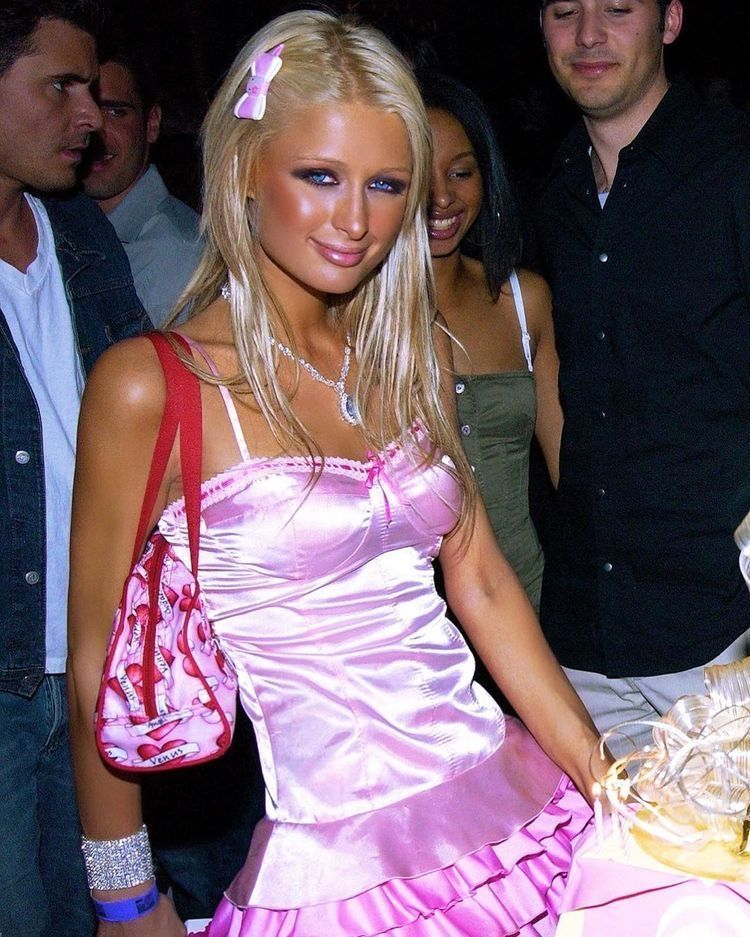
  • I’ll choose to look pretty no matter the circumstance. Beauty is my clutch.

    Welcome to my rant everyone.

    To me, the desire to beautify myself has always been intrinsically mine. Not a reflex conditioned by patriarchy, but a discipline I chose — almost religious in its regimen. I do it out of self-respect, out of the petty satisfaction of standing a little above the ordinary – mediocrity offends me. And because it is the only thing that can soothe my own fastidious senses. Beauty, to me, is not compliance. It’s control, taste, and the quiet arrogance of caring. I worship beauty because I give a damn about my life.

    I’m so incredibly put-off by people, men and women alike, who have this defeated attitude when it comes to beauty and refining oneself. Why is careful, accurate word choice deemed redundant? Why is good manners and etiquette archaic and uncool?

    It is weird to me that in this climate, we’ve made effort the enemy. Somewhere along the way, society decided that beauty only counts if it looks accidental — that to admit you tried is to confess weakness. Women are expected to glow without labor, to bloom without water, to be effortless yet immaculate. But effortlessness is a lie; it’s just another performance, another cage. I’d rather be accused of vanity than of apathy. At least vanity implies vision — a refusal to rot.

    Self-respect can masquerade as vanity,
    that devotion can look like pride, and that tending to yourself — meticulously, stubbornly —the most elegant form of rebellion left, is scorned upon and women – goddesses who commit to this practice can be so easily downgraded as men pleasers?

    People call it superficial, but that’s because they’ve forgotten that the surface is where light lives. We read faces, gestures, fabrics, glances — the world is built on appearances. To polish your exterior is not to betray depth; it’s to acknowledge that the soul deserves a fitting frame. When I paint my mouth red, when I trace my eyes with precision, it’s not to attract — it’s to announce. To say: I am here, and I care enough to be seen.

    Meanwhile, we’ve built an age addicted to irony — the art of not caring, of caring ironically, of performing fatigue as intelligence. The new virtue is dishevelment, the new sin is sincerity. But I’ve never trusted the cult of apathy; it reeks of fear. People hide behind disinterest because they’re terrified of wanting too much. I, on the other hand, am shameless about wanting. I want beauty, control, awe — the small godlike power of looking how I choose to look.

    My standards are my own and I don’t need validation – the ritual itself is enough.

    At the end of the day I’ll always come home to myself and Beauty. Ultimately, these are what consoles and grounds me.

    So yeah go out there and be as pretty as you can be. You owe no one “humility” 🙂